30 practical Cordyceps questions.
Search clear answers about identity, origin, cultivation, quality, certificates, traditional preparation, research limits and responsible use.
 Find an answerTry “certificate”, “storage”, “Small”, “Medium”, “King” or “research”.
Origin & sourcingWhat is Cordyceps?+
“Cordyceps” is used for a group of parasitic fungi and, commercially, for several related natural products. The wild caterpillar fungus most often discussed in Himalayan trade is Ophiocordyceps sinensis; cultivated products may use other species such as Cordyceps militaris.
Quality & buyingWhere does wild Ophiocordyceps sinensis grow?+
It is associated with high-altitude alpine grasslands of the Tibetan Plateau and Himalayan region. Populations occur in parts of China/Tibet, Bhutan, Nepal and India, where suitable host insects and mountain climate coincide.
Use & safetyWhy is wild Cordyceps expensive?+
Wild material has a specialised ecology, a short collection season, difficult high-altitude field work and strong demand. Price also reflects grading, origin claims and supply-chain layers; none of these alone proves medical potency.
Origin & sourcingHow is wild Cordyceps harvested?+
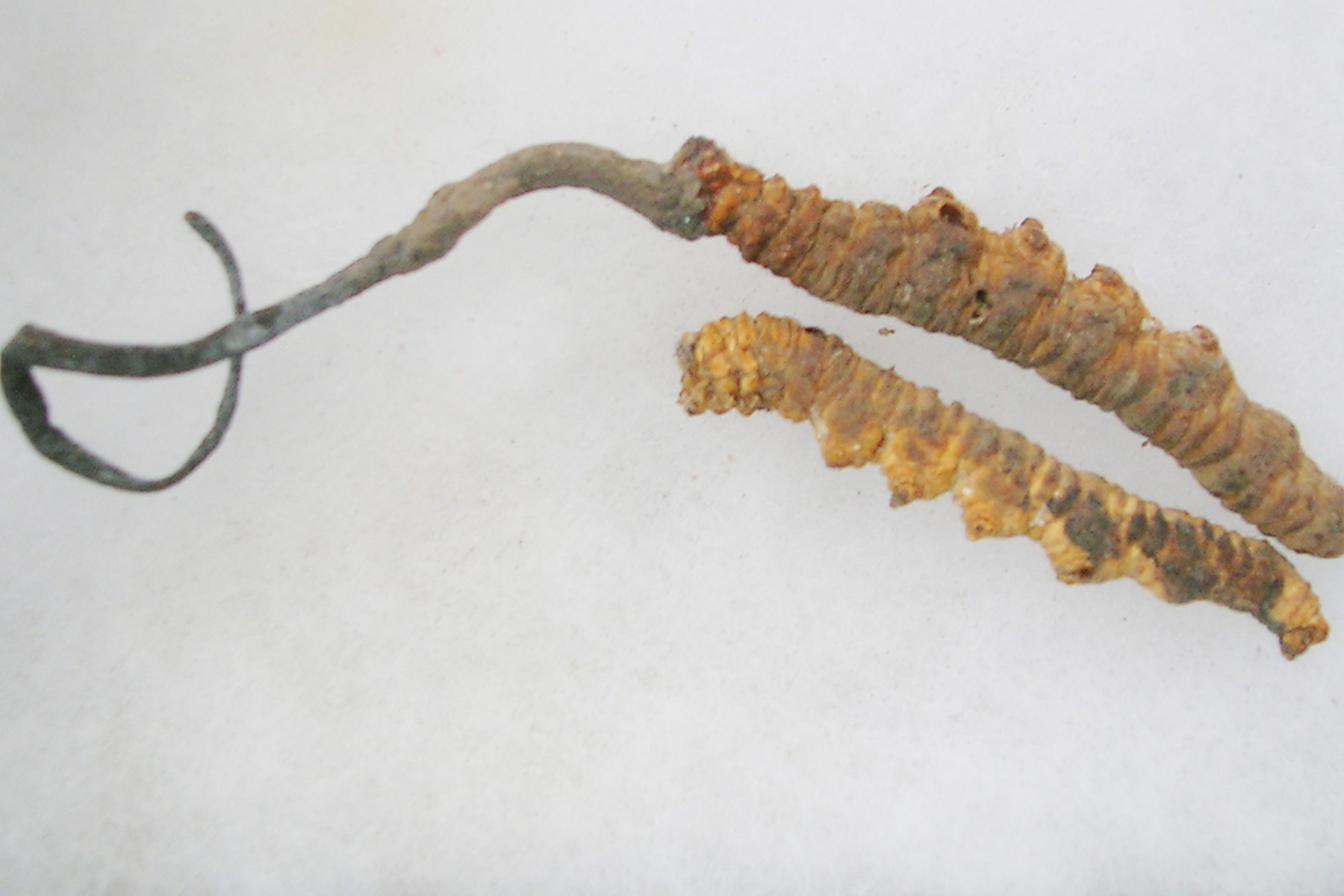
Collectors usually search alpine meadows by hand for the small fungal stroma emerging above the soil, then carefully remove the caterpillar-fungus structure. Cleaning and drying follow after collection.
Origin & sourcingIs Cordyceps a mushroom?+
It is a fungus, but wild O. sinensis does not look like a typical cap-and-stem mushroom. Its visible stroma grows from an infected caterpillar-derived structure in the soil.
Science & identityIs Cordyceps psychedelic?+
O. sinensis is not known as a psychedelic mushroom and is not used for hallucinogenic effects. It should still be treated as a biologically active natural product rather than assumed risk-free.
Science & identityWhat does Ophiocordyceps sinensis mean?+
It is the current scientific name for the wild caterpillar fungus historically called Cordyceps sinensis. Older publications may use the earlier name, so both terms appear in research and trade.
Science & identityWhat is cordycepin?+
Cordycepin is 3′-deoxyadenosine, a nucleoside analogue studied extensively in laboratory research. It is especially associated with C. militaris; amounts in O. sinensis can vary, so product-specific laboratory testing matters.
Science & identityWhat is adenosine?+
Adenosine is a normal molecule involved in cellular energy and signalling. It can be measured in some Cordyceps materials, but its presence on an assay does not by itself prove a clinical effect from consuming the product.
Science & identityWhat are Cordyceps polysaccharides?+
They are complex carbohydrate fractions isolated from fungal material. Different extraction and purification methods produce different polysaccharide profiles, which is why results from one extract cannot automatically be assigned to every Cordyceps product.
Origin & sourcingCan Cordyceps be cultivated?+
Some Cordyceps-related materials can be cultivated, including C. militaris fruiting bodies and various mycelial products. Wild O. sinensis has a much more complex host-fungus life cycle and is not equivalent to those cultivated formats.
Origin & sourcingIs cultivated Cordyceps the same as wild Cordyceps?+
No. Species, fungal structure, substrate, chemistry and production method can differ. Cultivated products can still be legitimate products, but they should be labelled accurately rather than passed off as wild O. sinensis.
Use & safetyHow should dried Cordyceps be stored?+
Keep it sealed in a cool, dry place away from sunlight, humidity and strong odours. Follow the manufacturer’s label, and do not use material that shows moisture damage, visible mould or unusual deterioration.
Use & safetyHow is Cordyceps traditionally prepared?+
Traditional culinary use includes tea-like infusions, warm water or milk, soups and broths, and sometimes powdering the dried material. A commercial product’s approved label should provide the final serving directions.
Use & safetyCan Cordyceps be taken every day?+
That depends on the specific product, serving size, user and local label instructions. There is no single universal daily dose for every Cordyceps material. People with medical conditions or regular medicines should seek professional advice.
Use & safetyIs Cordyceps a medicine?+
A supplement or food product should not be treated as a medicine unless it is authorised and labelled as one under applicable law. Research interest does not automatically turn a commercial supplement into a treatment.
Quality & buyingWhy does origin matter?+
Origin can affect species identity, environmental conditions, legal collection, supply-chain traceability and market value. Origin claims should therefore be supported by batch-level documentation rather than imagery alone.
Quality & buyingWhat is a Cordyceps certificate?+
“Certificate” can mean several things: a laboratory certificate of analysis, organic certification, government registration, origin paperwork or a supplier document. The document should clearly state what it certifies and which lot it covers.
Quality & buyingDoes a certificate prove all health claims?+
No. A certificate may verify identity, contaminants, a chemical marker or regulatory status, but it does not automatically prove that the product prevents or treats disease.
Use & safetyHow can buyers compare products?+
Compare species, whole specimen vs mycelium/fruiting body/extract, net quantity, ingredient declaration, origin evidence, batch testing, contaminant limits, storage information and the credibility of the seller’s claims.
Use & safetyWhat is the difference between whole Cordyceps and capsules?+
Whole specimens show the physical natural material and are often positioned as premium. Capsules are more convenient and can provide measured portions, but the buyer should verify what powder or extract is inside the capsule.
Origin & sourcingWhy are specimens different sizes?+
Wild specimens naturally vary because host insects, fungal growth and collection conditions differ. Larger specimens may command a premium as a visual grade, but size alone is not a validated measure of health effect.
Use & safetyWhat does “selected” Cordyceps mean?+
Usually it refers to visual grading for larger, more uniform or cleaner whole specimens. The seller should define the grading criteria instead of implying that “selected” automatically means stronger or more therapeutic.
Quality & buyingDoes higher altitude automatically mean better quality?+
No. Altitude is part of origin context, but quality also depends on correct identity, handling, storage, contaminants and batch verification. An altitude claim should not be used as a shortcut for potency.
Quality & buyingCan climate change affect Cordyceps?+
Potentially. O. sinensis depends on a high-altitude host-fungus ecosystem influenced by snow, temperature, soil moisture, vegetation and insect populations. Long-term ecological changes can affect distribution and harvest patterns.
Origin & sourcingWhy is sustainability important?+
Wild Cordyceps is valuable and collected from sensitive alpine habitats. Responsible sourcing should respect local rules, harvest pressure, habitat conservation and the economic role of collection in mountain communities.
Use & safetyCan Cordyceps replace prescribed treatment?+
No. A Cordyceps supplement should not replace prescribed medicines or delay medical assessment. Disease-treatment decisions require evidence and professional care.
Use & safetyWho should ask a doctor before using Cordyceps?+
Anyone who is pregnant or breastfeeding, has a chronic medical condition, takes regular medication, has an upcoming operation, or has had previous reactions to supplements should discuss use with a qualified healthcare professional.
Use & safetyAre research findings always based on humans?+
No. A large proportion of Cordyceps literature is laboratory or animal research. Human studies exist for some preparations and outcomes, but the material, dose and population may differ substantially from a retail product.
Quality & buyingWhat should a responsible Cordyceps website disclose?+
At minimum: what the product actually contains, species/material type, net quantity, origin when claimed, batch/storage information, marketplace or seller identity, relevant certificates/testing, clear disclaimers and claims that do not overstate the evidence.