
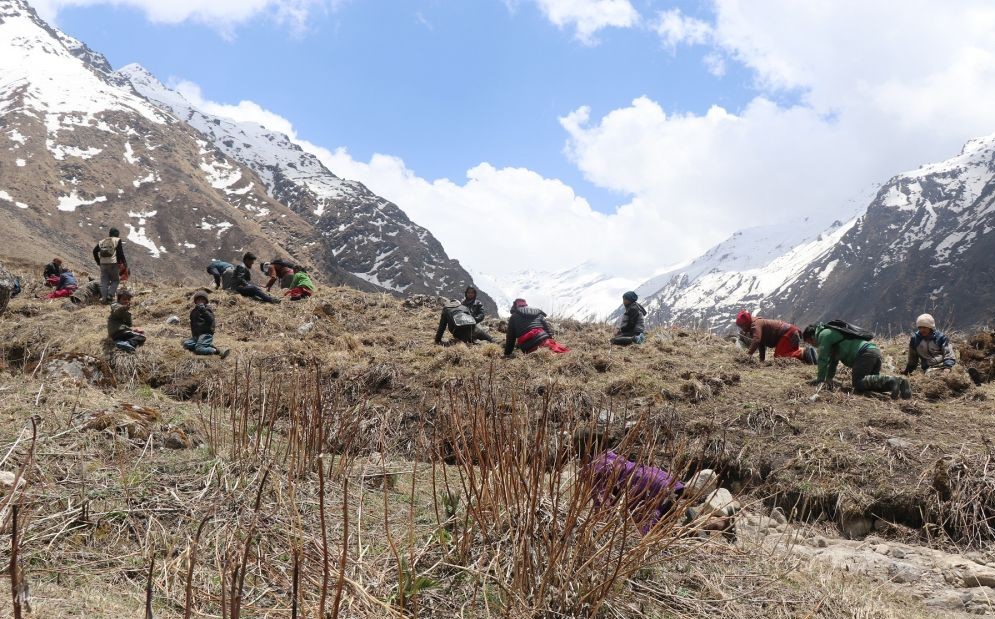
The landscape behind wild Cordyceps
Wild Ophiocordyceps sinensis is associated with alpine meadows on the Tibetan Plateau and Himalayan region. It develops through a specialised relationship with underground ghost-moth larvae and becomes visible during a limited seasonal window.
What an expedition can document
- High-altitude meadow habitat and seasonal conditions
- How collectors locate and remove specimens by hand
- Local collection rules and community practices
- Post-harvest cleaning, drying and grading
- Lot traceability from collector/supplier to final pack
Altitude claims need evidence
High altitude is an ecological fact, not a stand-alone quality certificate. If a brand claims collection at 4,000–5,000 metres or names a specific country or forestry area, that statement should be backed by reliable batch-level documentation.
Sustainability and community context
Demand for wild Cordyceps can create both important seasonal income and pressure on sensitive landscapes. Responsible sourcing therefore includes legal access, habitat stewardship, fair commercial relationships and avoidance of destructive collection practices.
Use this page as a provenance archive
The admin panel allows this page to be replaced with your own field photographs, route maps, interviews, documentary links and verified sourcing records. A documented story is stronger than a generic “Himalayan” label.