
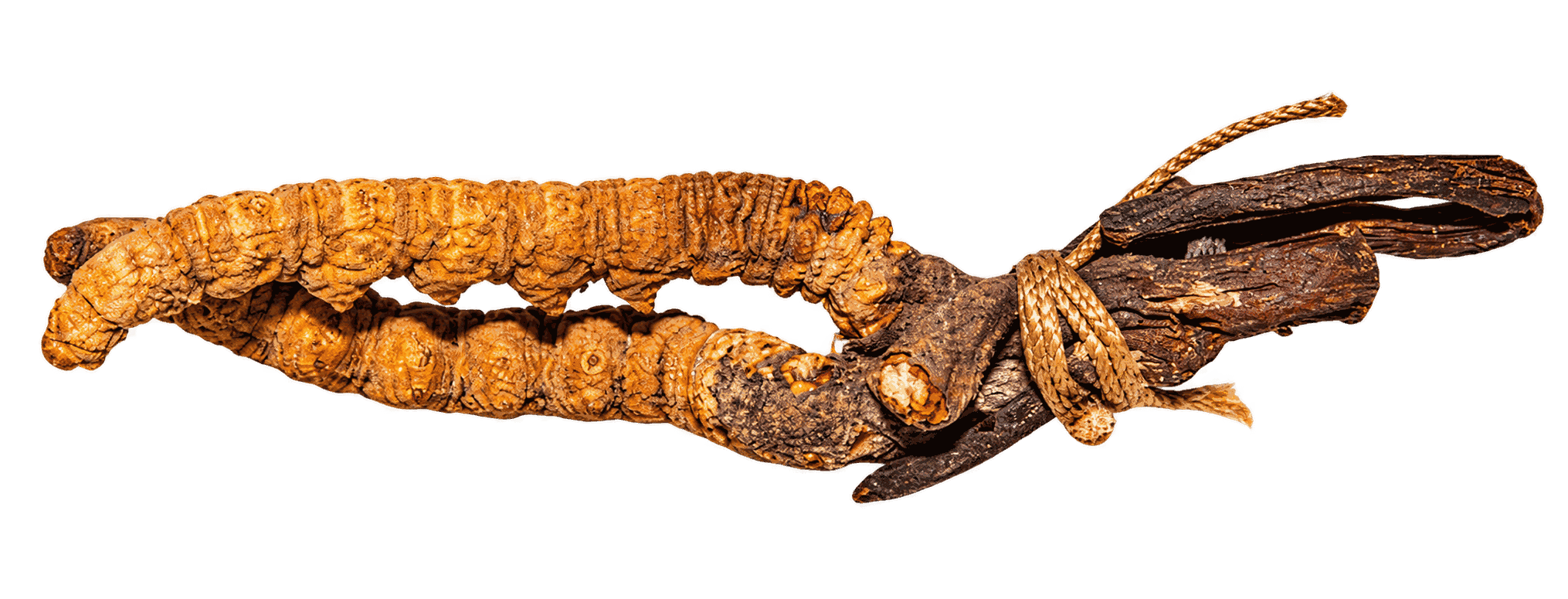
What is in Cordyceps?
Chemical analyses of Cordyceps materials report nucleosides and nucleobases, polysaccharides, sterols, amino acids, proteins, fatty acids, sugars and other fungal metabolites. The exact profile varies with species, strain, geography, substrate, developmental stage and processing.
Nucleosides
Adenosine, uridine and related molecules are frequently reported. Cordycepin (3′-deoxyadenosine) is widely studied, but it is especially associated with Cordyceps militaris and should not be assumed to occur at a clinically meaningful level in every O. sinensis product.
Polysaccharides
Polysaccharides are complex fungal carbohydrates and one of the largest areas of Cordyceps research. Their structure depends strongly on extraction and purification, so a result from one laboratory fraction cannot be generalised to all powders or whole specimens.
Sterols, amino acids and other constituents
Ergosterol and related sterols can appear in fungal analyses. Amino acids and minerals may also be measured, although the small serving size of a premium botanical means their nutritional contribution should not be exaggerated.
“Cordycepic acid”
Older literature and marketing may use the name “cordycepic acid,” often in connection with mannitol. Modern reporting should identify the actual molecule and analytical method rather than treating a historic name as a unique active drug.
How to read a laboratory report
- Check that the sample or lot number matches the product.
- Look for the laboratory name, date and analytical method.
- Separate identity/contaminant testing from marketing claims about health effects.
- For wild materials, heavy metals, microbiology and adulteration checks can be as important as “active” compounds.
Key principle: detecting a compound is not the same as proving a health outcome. Clinical relevance depends on dose, bioavailability and human evidence.